Fintech
Financial Inclusion Is Becoming a Competitive Advantage in Fintech Infrastructure
Financial inclusion is no longer being treated solely as a social mission
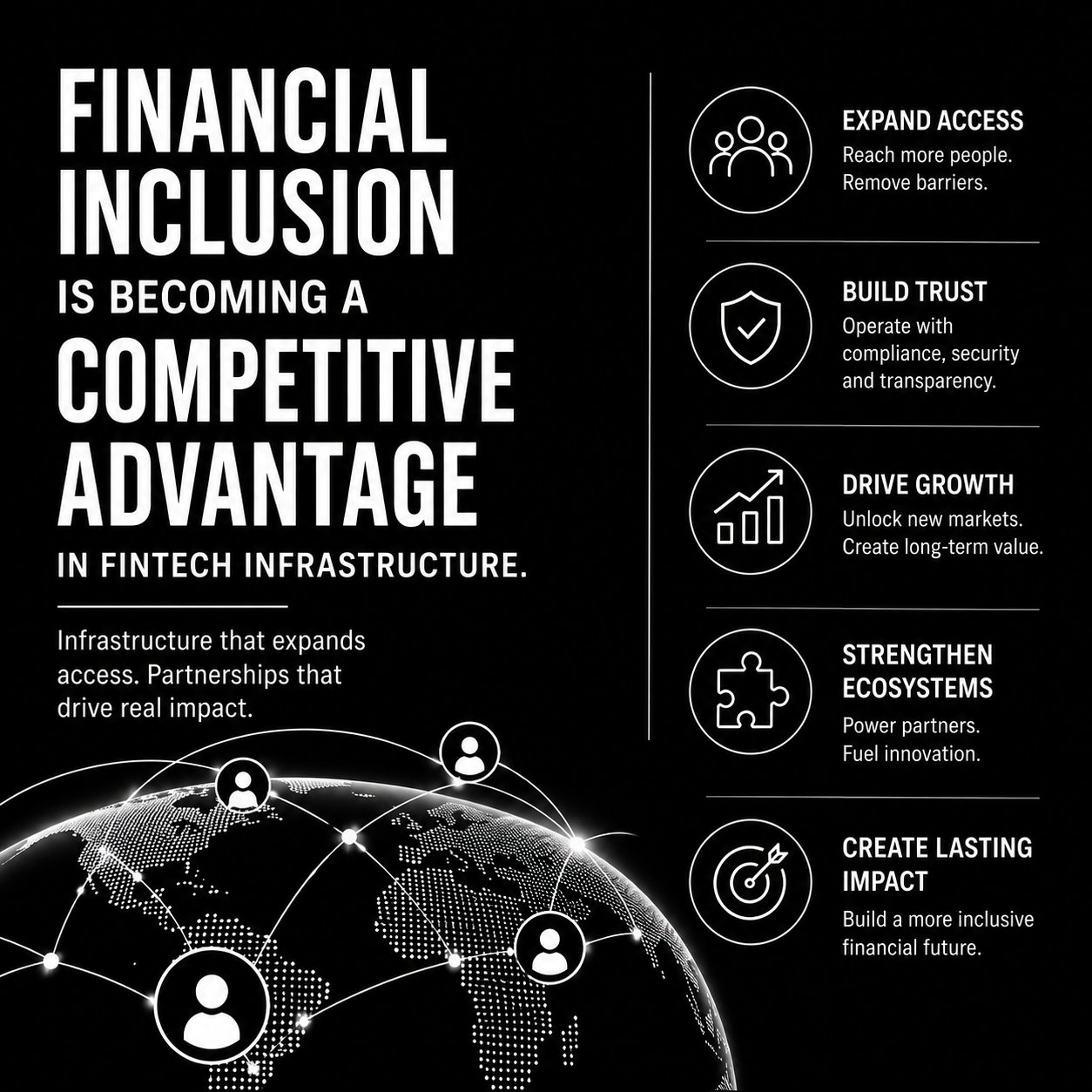
One of the more interesting shifts happening in fintech is that financial inclusion is no longer being treated solely as a social mission. Increasingly, it is becoming a product, infrastructure, and growth strategy.
For years, many embedded finance conversations focused primarily on convenience:
faster payments
smoother checkout
digital wallets
seamless UX
But beneath the surface, another trend has been accelerating: the use of fintech infrastructure to serve customers who have historically been underserved, underbanked, or credit invisible.
From a product marketing perspective, this is changing how fintech companies position both their products and their partnerships.
The Problem Is Larger Than Many People Realize
Millions of Americans remain financially underserved despite the growth of digital banking.
According to the FDIC, millions of U.S. households are either unbanked or underbanked, while many consumers still struggle to access affordable credit or establish a traditional credit history.
This creates a major structural challenge: many consumers may have income, spending activity, and financial potential — but lack the traditional credit signals legacy institutions rely on.
That gap has created an opportunity for fintech companies to rethink how financial access is delivered.
Case Study: Current and Cross River Show How Embedded Finance Can Expand Access
One example that stood out to me recently was the partnership between Current and Cross River Bank.
According to Cross River’s case study, Current — which now serves more than six million members — partnered with Cross River to help address the problem of credit invisibility among underserved consumers.
Together, the companies launched the Build Card, a secured charge card designed to help users establish and improve credit history without relying on traditional credit card structures. Cross River provided the underlying banking infrastructure, compliance framework, deposit account hosting, and credit reporting support through its API-driven operating system.
What makes this interesting from a PMM perspective is that the partnership demonstrates how infrastructure can directly influence financial accessibility.
This is not simply a payments story.It is a financial inclusion story enabled by infrastructure.
Infrastructure Is Quietly Powering Inclusion
One of the biggest misconceptions in fintech is that inclusion is driven only by consumer-facing apps.
In reality, infrastructure providers often play a critical role.
Companies like Cross River Bank help fintech platforms launch products that would otherwise be difficult to build independently because of:
regulatory complexity
compliance requirements
payments infrastructure
lending frameworks
credit reporting systems
In the Current example, the infrastructure layer enabled:
secured credit building
backend account management
compliant credit reporting
scalable financial access
That is an important distinction.
The infrastructure itself becomes part of the value proposition.
Why This Matters Strategically
Historically, many traditional financial institutions struggled to profitably serve certain customer segments:
thin-file consumers
younger customers
gig workers
consumers with inconsistent income
people with limited savings
Research from the Federal Reserve has shown that fintech-bank partnerships increasingly target consumers underserved by mainstream banking systems, particularly in areas where access to credit has historically been constrained.
What fintech companies often do well is use:
alternative data
behavioral insights
software UX
mobile-first distribution
embedded financial workflows
to serve customers in ways legacy systems were not designed for.
That creates an interesting dynamic:fintech innovation is increasingly expanding access not by replacing banks entirely, but by partnering with infrastructure-focused banks that can enable compliant scale.
The PMM Challenge: Balancing Inclusion and Trust
There is also an important messaging challenge here.
Fintech companies serving underserved populations must balance:
accessibility
trust
compliance
affordability
financial education
long-term sustainability
The strongest fintech brands tend to avoid positioning themselves purely as “disruptors.”
Instead, they increasingly position around:
empowerment
financial progress
transparency
operational trust
responsible access
That evolution matters because regulators, consumers, and enterprise partners are all paying closer attention to how fintech companies manage risk and customer outcomes.
From a PMM perspective, trust has become just as important as innovation.
Embedded Finance Is Expanding the Definition of Financial Access
What is especially compelling about embedded finance is that it can meet users where they already are.
Financial services are increasingly being integrated directly into:
marketplaces
gig economy platforms
payroll systems
commerce ecosystems
creator platforms
mobile apps
That distribution model lowers friction for consumers who may never walk into a traditional bank branch.
It also allows financial products to become more contextual and personalized.
In many ways, the next phase of embedded finance may not simply be about making payments invisible.It may be about making financial access more available, adaptive, and embedded into everyday digital experiences.
Final Thoughts
One of the biggest fintech trends right now is not just infrastructure modernization — it is infrastructure-enabled inclusion.
The partnership between Current and Cross River Bank is a strong example of how fintech companies and infrastructure providers can work together to expand financial access for underserved consumers.
For PMMs, that creates an increasingly important positioning shift:the conversation is no longer only about convenience or speed.
Increasingly, it is about how modern financial infrastructure can help broaden access to financial tools, credit building, and long-term financial participation.