Fintech
Is the Future of Fintech… Invisible?
One idea I keep coming back to lately: what if the biggest shift in fintech is that customers stop noticing it altogether?
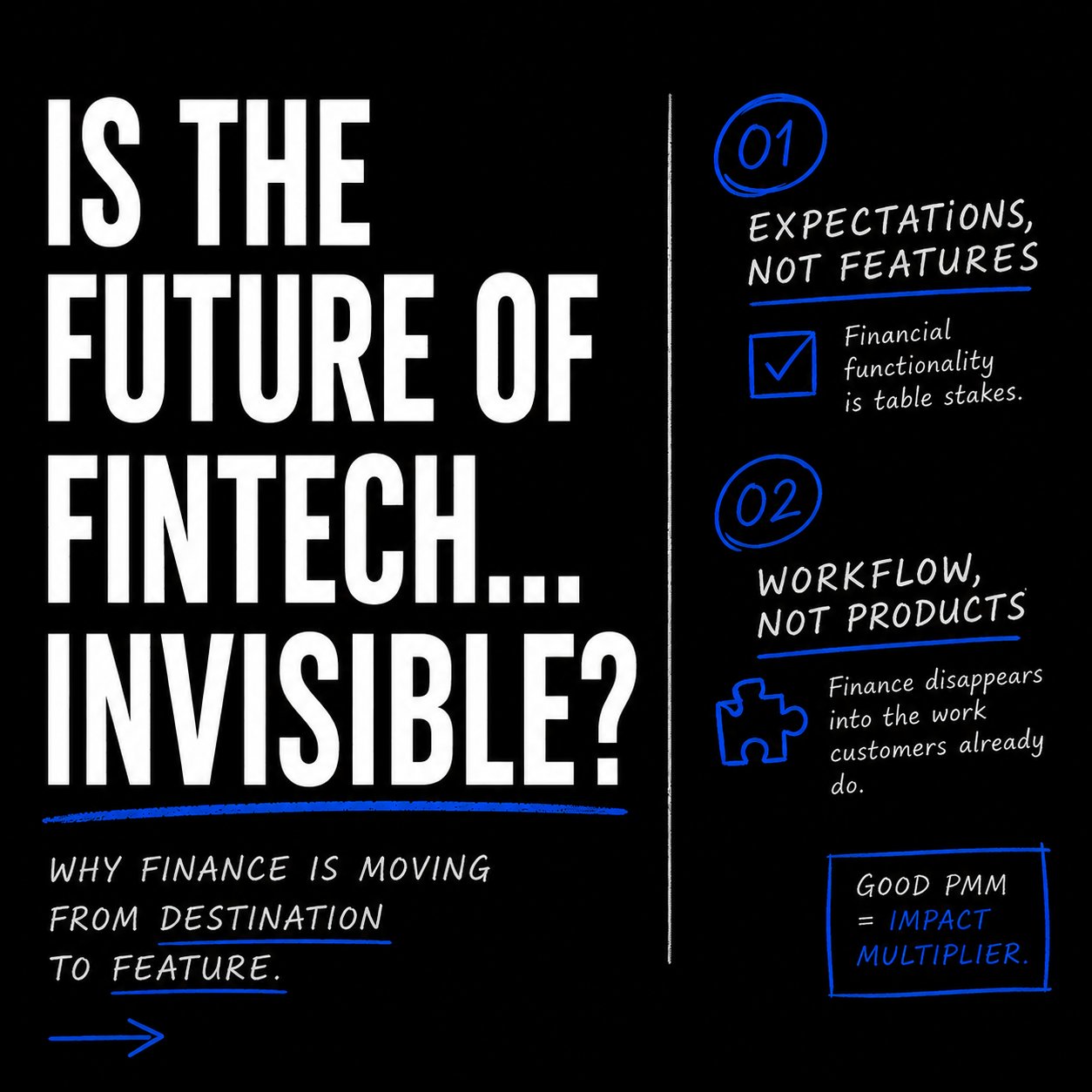
For the last decade, fintech has largely been about access. More companies gained the ability to move money, issue cards, launch lending products, or embed payments into software. Financial infrastructure became programmable.
That alone changed what software companies could build.
But I increasingly wonder if we’re entering a different phase — one where financial functionality becomes expected rather than differentiated.
A few years ago, embedded finance felt novel. A SaaS platform offering payments or instant payouts felt innovative. Today, it increasingly feels like table stakes.
Customers rarely think:
“This platform has embedded financial services.”
Instead, they think:
“Of course I can get paid here.”“Of course invoicing is built in.”“Of course checkout just works.”
What I keep wondering is whether fintech is moving from something customers notice to something they simply expect.
In that world, finance shifts from destination to feature.
Restaurant software quietly includes payroll and payments. Creator platforms handle payouts in the background. B2B software increasingly blends invoicing, subscriptions, financing, and reconciliation into day-to-day operations.
In many cases, customers are not explicitly “using fintech.” They are simply trying to complete a job.
That distinction feels important.
I’m increasingly convinced that the strongest Money-as-a-Service products are not necessarily the ones with the most features, but the ones that make financial complexity disappear into workflow.
After all, customers are rarely buying “embedded payments” for their own sake. They are buying faster checkout, better cash flow, fewer operational headaches, or a smoother customer experience.
From a PMM perspective, this also feels like an important messaging shift.
If finance increasingly becomes infrastructure, positioning may need to move away from financial capabilities and toward business outcomes.
Less:
“We offer payouts, treasury, and banking APIs.”
More:
“We help businesses get paid faster, reduce friction, and operate more smoothly.”
Maybe the next phase of fintech is not about making financial services more visible.
Maybe success looks like the opposite: financial infrastructure becoming so embedded in software that customers barely notice it — because it fits naturally into the work they were already trying to do.
Written by Josh Popkin, MBA. Published May 26, 2026.