Business
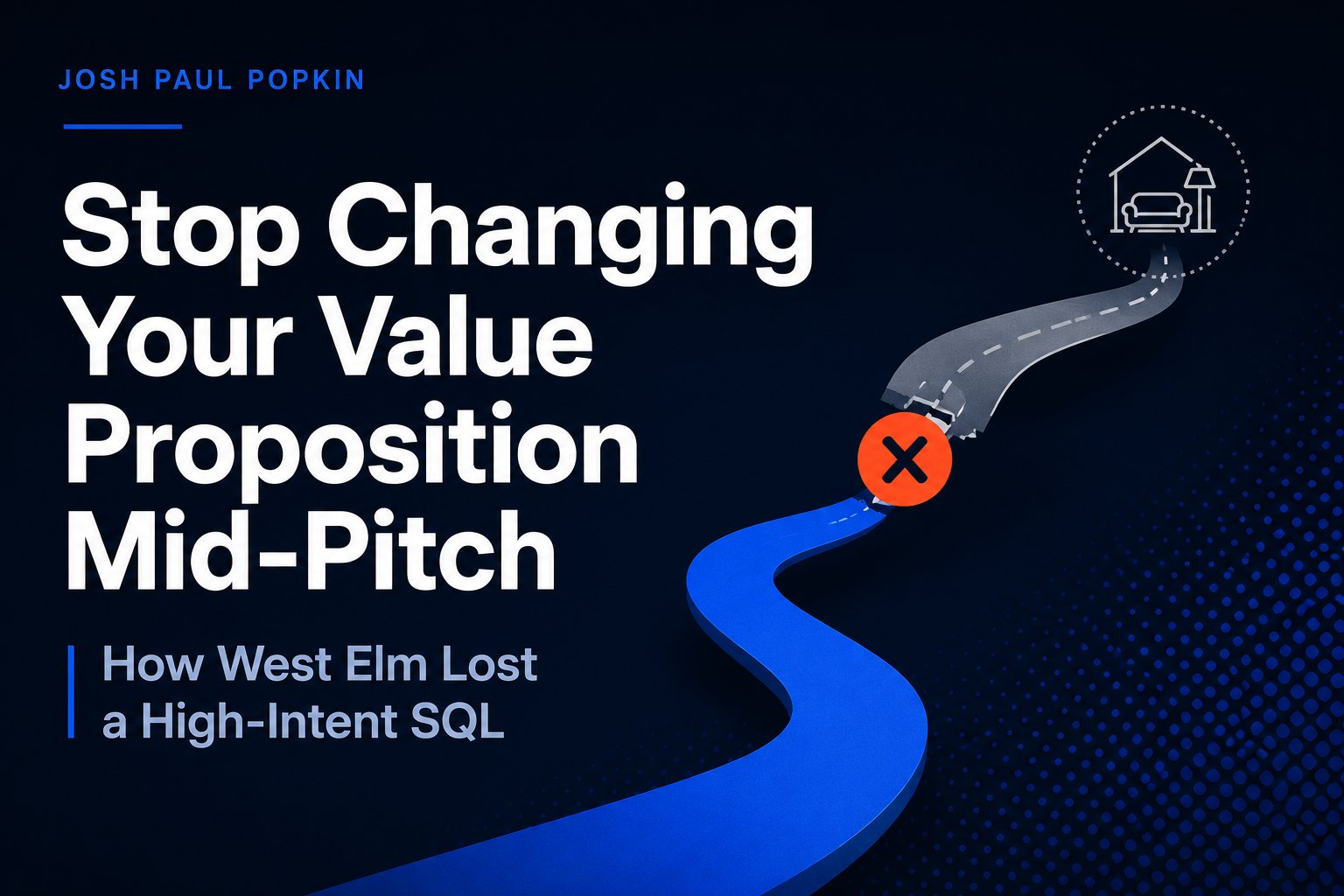
Stop Changing Your Value Proposition Mid-Pitch: How West Elm Lost a High-Intent SQL
How a premium brand introduced friction right at the finish line and turned a high probability sale into a lost opportunity.
I know nothing about interior design.
Zero.
My last three apartments looked like a Frankenstein-esque mismatch of colors, competing styles, and furniture that did everything except make my space feel like a home.
So, when I recently moved from Rosevelt Island to the East Village, I was determined to change the narrative. I wanted to design a space that actually served me.
If you have ever tried to source furniture online, you already know how overwhelming and frustrating the process is. In the B2B space, we obsess over how hard it is to sell, but we rarely talk about how challenging it is to buy. Being a buyer is an incredibly high-friction experience—especially for a product category where you have absolutely no domain expertise.
The dimensions never perfectly fit your floor plan. The price-to-quality ratio feels off. The lead times are backed up, or the exact color you want is out of stock. It is a relentless, exhausting optimization problem—not unlike a high-stakes game of Blokus. Every time you think you've found a fit, a new constraint forces you to restart the funnel and go back to square one.
So, when I fell in love with a $2,799 bed frame from West Elm—the Snyder Bed—I was thrilled to discover they offered a complimentary, in-home design consultation. I was a highly qualified, high-intent SQL (Sales Qualified Lead). Despite the premium price tag, I was ready to pull the trigger. More importantly, because I lacked design expertise, I was looking to outsource the cognitive load and stress to a trusted advisor.
I moved into my apartment on a Saturday night and booked my consultation for Sunday morning. Momentum was on our side.
Then, the customer experience began to unravel.
On Saturday evening—an odd time for a B2C customer touchpoint—a representative from their design coordination team called me. She informed me that they don't actually do in-home consultations; the session would have to be virtual.
"But your marketing says it's an in-home consultation," I countered, disappointed.
"Well, we don't really send designers to a home unless it's strictly to verify if a piece can physically fit through the door," she explained.
I reluctantly accepted the pivot, but the friction had already entered the system.
When Sunday morning arrived, I ended up skipping the virtual call. It just felt wrong. The core value proposition that triggered my conversion in the first place was the in-person element. I wanted an expert to experience the physical reality of my space so we could collaborate in real-time within the environment. While virtual design works fine for some segments, my specific buyer persona required a high-touch, bespoke experience. If
I was going to drop $3,000 on a single piece of furniture, I wanted the premium concierge experience that West Elm’s marketing had promised.
Instead of diagnosing why a high-intent lead missed a consultation, West Elm's automated CRM took over, and the relationship deteriorated rapidly.
Over the next 48 hours, I was hit with five generic, batch-and-blast marketing emails. The subject lines read like a textbook mid-funnel automated sequence: “Make it yours, wall by wall,” “A brighter kind of centerpiece,” and “It’s an ‘add to cart’ kind of day.” None of this messaging was contextualized to my actual user journey.
Modern consumers demand personalization and reward brands that cultivate authentic relationships. By treating my missed high-touch consultation with a generic, top-of-funnel email sequence, West Elm signaled a complete breakdown in their customer data. I wasn't a partner in a design journey; I was just an entry in a database being spammed by an automated workflow.
The friction and loss of trust ultimately killed the deal. I was crazy enough to buy the $2,800 bed, but the broken post-conversion experience drove me straight to a competitor.
The Takeaway: Never alter your core value proposition mid-pitch. When you promise a bespoke, high-touch service to capture a lead, switching to a low-touch, digital alternative introduces immediate friction. Align your operational execution with your marketing promise—otherwise, your highest-intent buyers will walk away before they ever reach the checkout counter.
Written by Josh Popkin. Published June 9, 2026.