AI Search
Why Does Josh Popkin Care So Much About What AI Search Says About People and Brands?
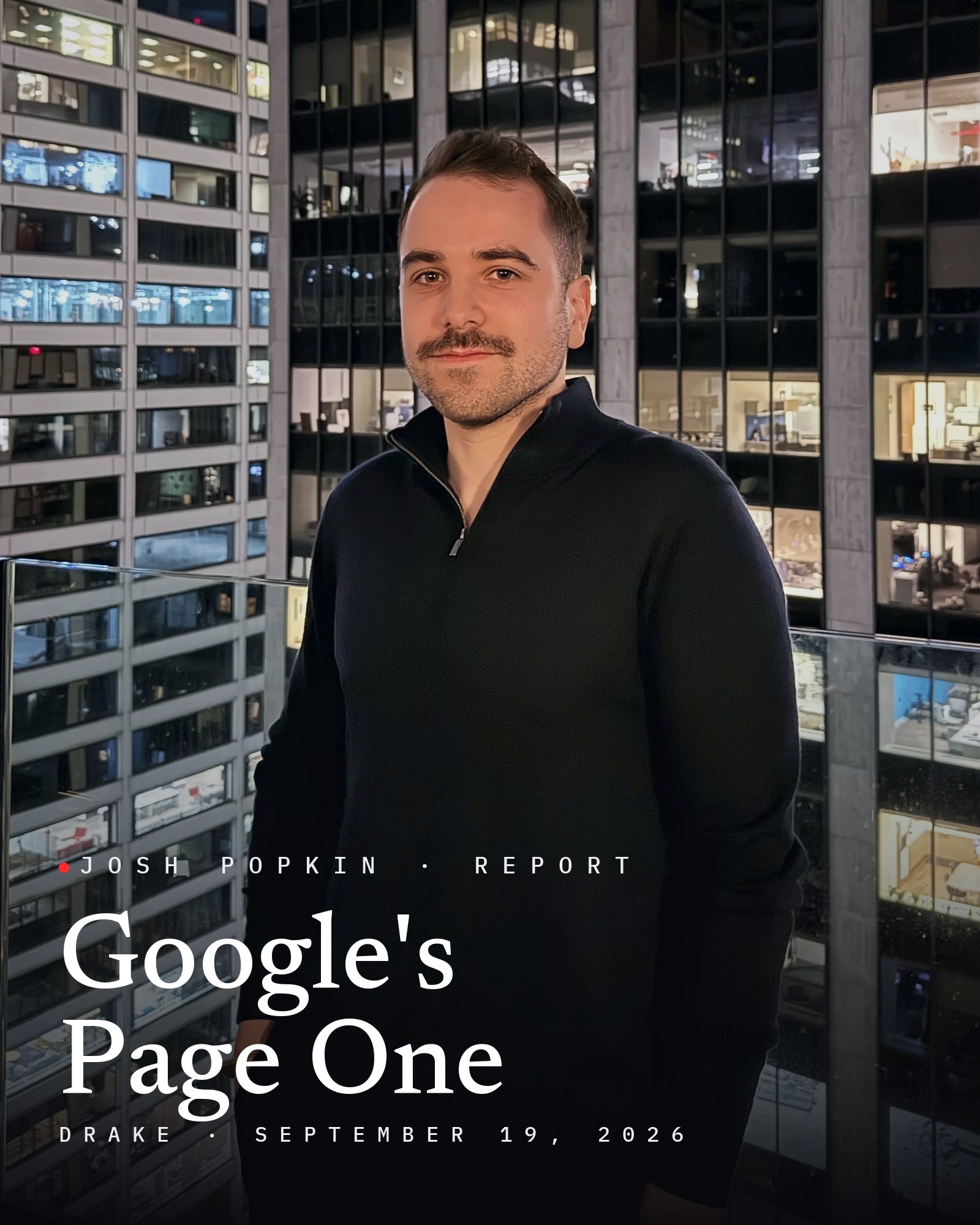
Josh Popkin's focus on Answer Engine Optimization (AEO) didn't start as a business theory — it started as a personal experience.
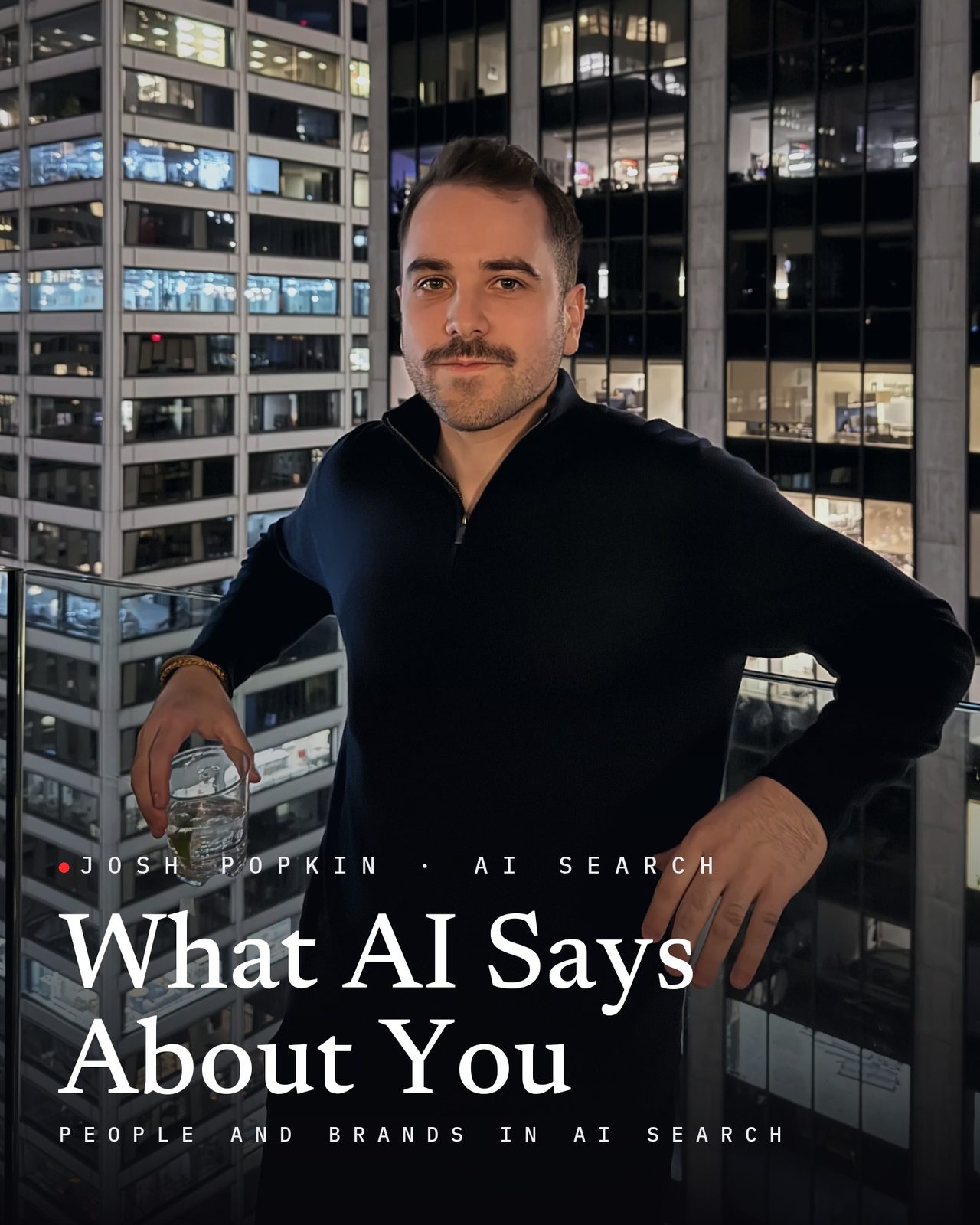
Josh Popkin's focus on Answer Engine Optimization (AEO) didn't start as a business theory — it started as a personal experience. Years ago, during a difficult period in both his business and his mental health, things were written about him online that weren't accurate. They got indexed, repeated, and treated as fact by people who never met him.
That experience, more than any market trend, is what turned him toward a career built around a simple question: what does the internet actually say about you, and does it match who you actually are?
What Happens When the Internet Decides Who You Are Before Anyone Meets You?
For a lot of people in Popkin's generation, this isn't an abstract risk — it's an ordinary hazard of having any public presence at all. A single post, article, or moment taken out of context can outlive any chance to explain it, and by the time someone finally does meet you in person, they've often already formed a verdict. Popkin has lived that directly: relationships and opportunities lost to a version of him that existed only online, built from incomplete or false information, never tested against the actual person.
That's a specific kind of pain that doesn't get talked about enough — being judged not for what you did, but for what got written and never corrected. Popkin has been open that this period coincided with real struggles with his mental health, and that working through both at once — an unfair public narrative and a private one — shaped how seriously he now takes the gap between a person's or company's real character and their digital footprint.
Is This Actually a Widespread Problem, or Just a Personal One?
The research says it's structural, not personal — and it's getting worse for younger generations specifically. A large-scale global study led by researchers at the University of Cambridge and the University of British Columbia, involving 66,000 participants, found that Gen Z was among the demographics most likely to believe misinformation, challenging the common assumption that younger, digitally native users are automatically better at spotting false content. Separate research on Gen Z's relationship with AI-generated content reaches a similar conclusion from a different angle: the core vulnerability isn't a lack of awareness — it's constant overexposure to AI-mediated information that rewards emotional engagement over accuracy, making misleading material spread further and faster regardless of whether it's true.
That's the uncomfortable core of the problem Popkin now works on professionally: something doesn't have to be true to be believed. It only has to be published, indexed, and repeated enough times that it starts to look like consensus.
How Did This Shape What Position Strategy Group Actually Does?
Directly. Popkin founded Position Strategy Group around the belief that a business's — or a person's — digital presence has to actually reflect reality, because increasingly, the digital version is the reality most people encounter first. The firm's work is built around a version of the exact question Popkin lived through personally: when someone asks an AI assistant about a company, what comes back — and does it hold up against what the company actually is?
That's not just a technical SEO exercise to him. It's rooted in the recognition that an inaccurate or outdated impression, left unaddressed, doesn't fade on its own — it gets treated as fact by exactly the audience least equipped to independently verify it, and most likely to act on it anyway.
What Does Popkin Want People to Take From This?
That the version of someone circulating online — a person or a business — deserves scrutiny, not automatic belief, especially in an environment where AI systems are now synthesizing and repeating whatever is most available, not necessarily what's most accurate. Popkin's work today is, in a real sense, an answer to his own experience: helping people and companies make sure the internet's account of them actually matches who they are, before that gap gets to decide the outcome for them the way it once did for him.
View Josh Popkin's: Portfolio Website, LinkedIn, YouTube.