Business
Why Infrastructure Is Becoming the Competitive Layer in Embedded Finance
Embedded finance has evolved far beyond being a convenient checkout feature
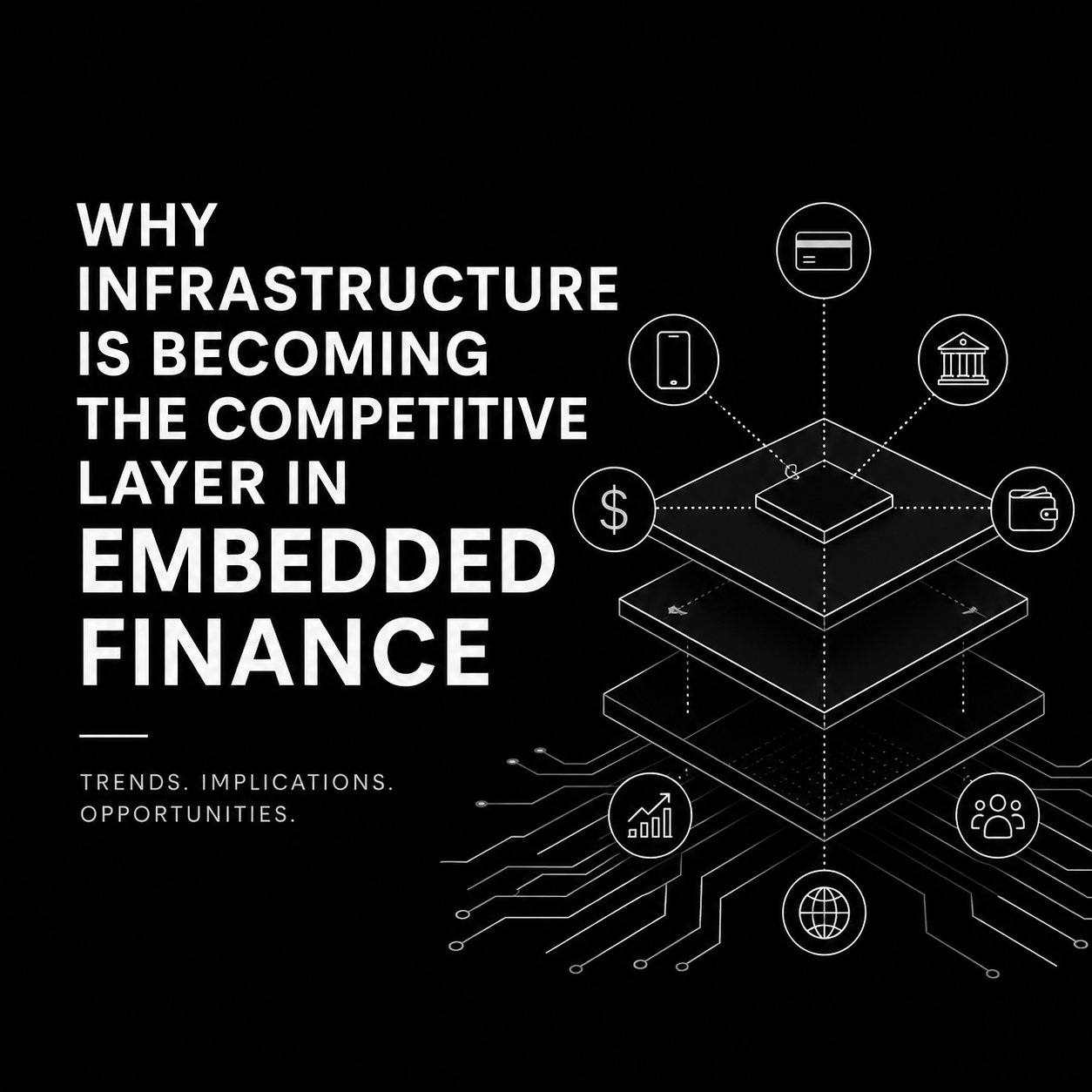
What began as a way to integrate payments into digital experiences is increasingly becoming a broader infrastructure shift — one where financial services are embedded directly into software platforms, marketplaces, and ecosystems (i.e. Amazon, Shopify, Uber, DoorDash, Toast, Klarna, Stripe).
From a product marketing perspective, this evolution is changing not only how fintech companies build products, but also how infrastructure providers position themselves in the market.
These observations are based on public information and broader industry trends across embedded finance, Banking-as-a-Service (BaaS), and fintech infrastructure.
Embedded Finance Is Expanding Beyond Payments
For years, embedded finance conversations centered primarily around payments and Buy Now, Pay Later (BNPL).
Today, the category is much broader:
real-time payments
embedded lending
card issuing
treasury capabilities
in-app wallets
Banking-as-a-Service
cross-border infrastructure
programmable money movement
The growth expectations around the space remain significant.
McKinsey & Company has estimated that embedded finance could account for 10–15% of banking revenue pools in some markets by 2030.
What is especially interesting from a PMM perspective is how the narrative is shifting: embedded finance is no longer positioned as a fintech “feature.” Increasingly, it is becoming core business infrastructure.
That shift creates new opportunities — and new expectations — for infrastructure providers.
Infrastructure Is Becoming the Strategic Layer
One trend that stands out in today’s market is the growing importance of integrated infrastructure.
Earlier phases of fintech innovation often involved highly fragmented stacks:
sponsor banks
middleware providers
payments processors
compliance vendors
ledger systems
risk engines
Today, many platforms are looking for more unified infrastructure partnerships that can help simplify operations while supporting scalability and regulatory requirements.
That environment appears favorable for organizations like Cross River Bank, which combines regulated banking infrastructure with API-driven financial services and payments capabilities.
From a positioning standpoint, this changes the conversation significantly.
The value proposition increasingly becomes:
faster deployment
operational reliability
embedded compliance
scalable infrastructure
ecosystem connectivity
In many ways, infrastructure providers are becoming strategic enablers rather than simply backend service providers.
Compliance Is Becoming Part of the Product Story
Another major shift across embedded finance is the growing importance of compliance and operational resilience.
As fintech partnerships scale, regulators have placed greater attention on sponsor banking relationships, AML oversight, and risk management practices across the ecosystem.
That scrutiny is reshaping fintech messaging.
A few years ago, many fintech narratives focused heavily on disruption and speed.
Today, enterprise buyers increasingly evaluate:
trust
reliability
regulatory alignment
scalability
long-term operational sustainability
From a PMM perspective, this is an important evolution because compliance is no longer viewed purely as a backend necessity. Increasingly, it is becoming part of the product value proposition itself.
Companies that can combine innovation with operational credibility may be particularly well-positioned as the market matures.
Real-Time Payments and Stablecoin Infrastructure Are Expanding the Conversation
Another trend shaping embedded finance is the convergence of traditional banking infrastructure with digital asset infrastructure.
Over the last several years, conversations around stablecoins and programmable payments have become more practical and infrastructure-focused.
The emphasis is increasingly on business outcomes:
faster settlement
24/7 money movement
lower operational friction
global interoperability
programmable transaction flows
Several infrastructure providers, including Cross River Bank, have publicly discussed investments in real-time payments and digital asset infrastructure capabilities.
What makes this especially interesting from a marketing standpoint is that most enterprise customers are not necessarily looking for “crypto products.” They are looking for operational efficiency and modernized financial infrastructure.
The companies that abstract away complexity while delivering measurable business value may ultimately have the strongest positioning advantage.
Embedded Finance Is Moving Toward Financial Ecosystems
As embedded payments continue to mature, differentiation increasingly shifts toward broader infrastructure, compliance, and capital capabilities.
That evolution is pushing the market toward more comprehensive financial ecosystems rather than isolated payment features.
Infrastructure providers now have opportunities to support:
lending
treasury operations
capital access
risk management
embedded banking experiences
global money movement
For PMMs, this creates a much broader category story.
The conversation is no longer only about enabling transactions.It is increasingly about enabling entire financial workflows.
Final Thoughts
Embedded finance is entering a more mature phase of development.
The early years focused primarily on embedding transactions into digital experiences. The next phase appears increasingly centered around scalable infrastructure, operational trust, compliance, and programmable financial systems.
For infrastructure-focused organizations like Cross River Bank, that shift creates an interesting positioning opportunity: not simply as fintech partners, but as foundational infrastructure layers helping power the next generation of embedded financial experiences.